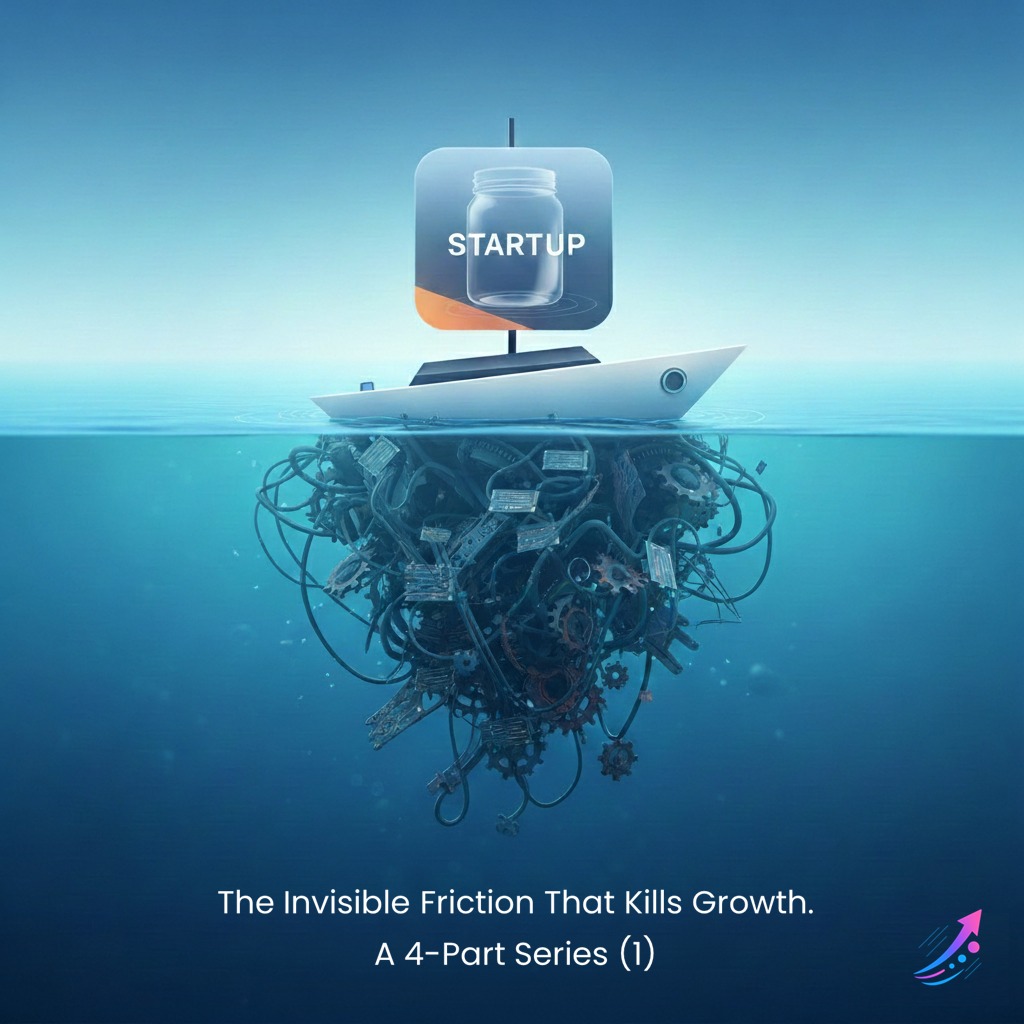
The post mortem of a failed startup is usually written as a tragedy of errors. We look for a bad pivot, a missed round of funding, or a predatory competitor. But for the vast majority of software companies that hit a ceiling between Seed and Series B, the end is not a bang. It is a slow and quiet settling into the silt. These companies do not crash. They simply lose buoyancy. They become zombie startups where the engine is still running but the vessel is too heavy to move forward. I have sat in these offices. You can feel it in the air. People are busy, but nothing is moving. This is not a failure of effort but a failure of physics.
The Hidden Cost of Technical and Process Sludge
This loss of buoyancy is rarely caused by the market. Instead, it is the result of invisible friction. This is the microscopic drag created by compound blind spots in how the company operates. In the early days, a startup is light and nimble. Decisions are made over coffee, code is shipped daily, and everyone knows the mission. But as the team grows, the friction coefficient begins to rise. What used to take a morning now takes three meetings and a cross departmental sync. This is the weight of the invisible jar. When you are inside of it, you cannot read the label that says exactly why you are sinking.
Measuring the Economic Drain of Friction
The statistical reality of this friction is staggering. Research by Stripe and Harris Poll indicates that the average developer spends approximately 13.5 hours per week dealing with technical debt rather than building new features. When you multiply that across a growing engineering team, you realize that the majority of your payroll is being spent simply to stay in the same place. This is the definition of losing buoyancy. You are burning fuel at an incredible rate, but the ship is not gaining speed. It is a soul crushing way for an engineer to work, knowing that their talent is being swallowed by legacy problems that no one seems to have the time to fix.
Mapping the Value Stream to Find the Sludge
To regain momentum, leadership must conduct what we call an Invisible Friction Assessment. This is not a financial review but a structural one. It begins by mapping the value streams of the company. You must trace the actual path an idea takes to become a feature or a lead takes to become a customer. When you look at these paths as stories rather than spreadsheets, the sludge becomes visible. You start to see where the handoffs are fumbled and where the ego of a specific department head is slowing down the entire organization. You find that the sales team is chasing the wrong profile because the product team changed the roadmap three months ago without a formal handoff.
Identifying the Codified Human Problems
You find that your best engineers are spending nearly half of their time fixing technical debt from two years prior because the original architecture was never meant to scale. You discover that your marketing spend is being wasted because the onboarding process is so broken that new users leave before they ever see the value of the software. These are not just technical problems. they are human problems that have been codified into the business. Without a structured way to look for them, they remain part of the furniture. They become the way we have always done things, which is the most dangerous phrase in any growth company.
From Lagging Indicators to Leading Velocity
The goal of this assessment is to move from lagging indicators like revenue to leading indicators like time to decision. If it takes your leadership team two weeks to decide on a pricing change or a month to approve a new hire, you have a buoyancy problem. These delays are not just administrative hurdles. they are anchors. By surfacing these quiet weights through structured external assessments, you can finally read the label on the jar. Only then can you begin to shed the weight, refocus the energy, and watch the ship begin to rise again. An assessment allows you to stop guessing about why the company feels heavy and start measuring the specific points of drag that are holding you back. It gives the team permission to be honest about what is broken.
Where is the ‘sludge’ currently hiding in your dev cycle?
Bal Mattu. Ktaria. Diagnostic assessments for Pre-Seed to Series B startups.